How-to
How to become a distributor of a French skincare brand
Short answer
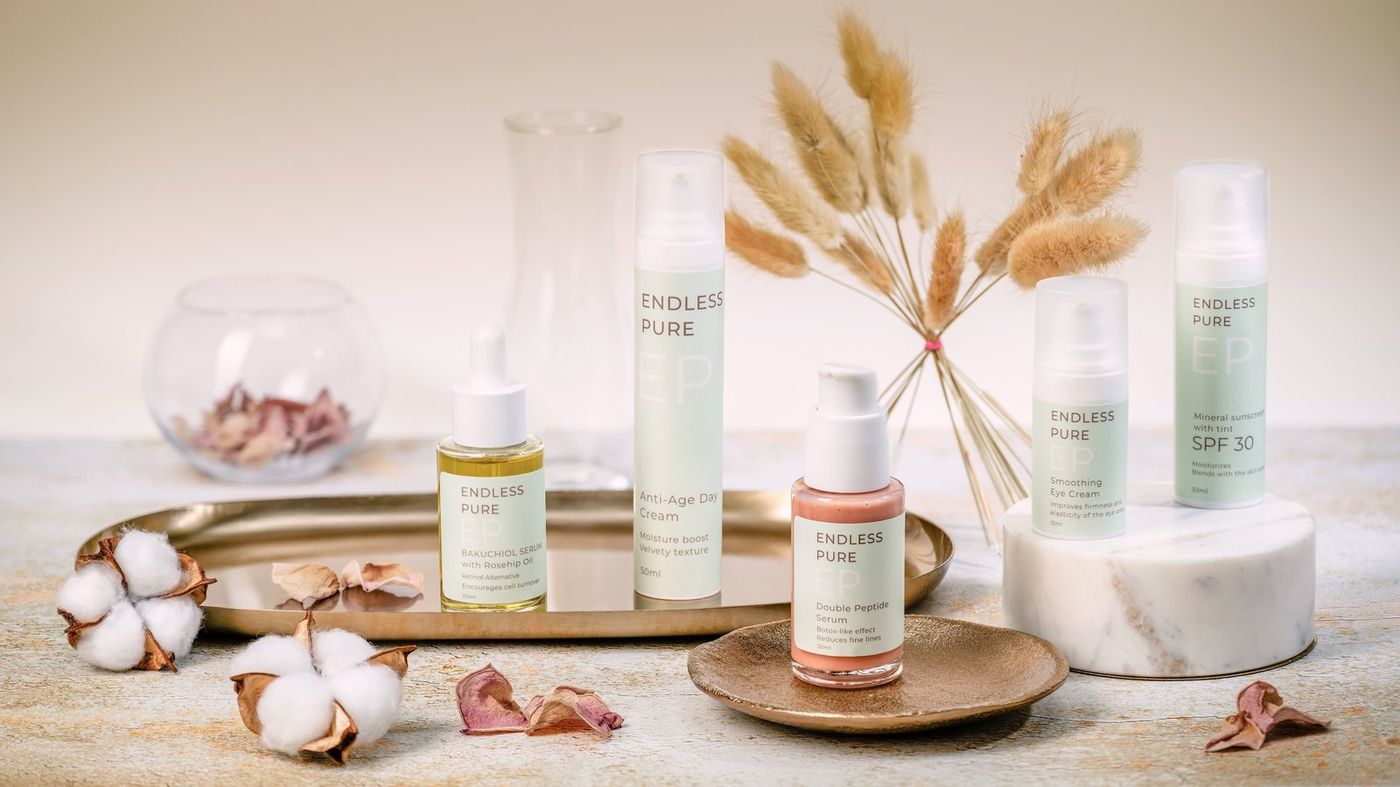
A distributor imports the brand as importer of record, registers products with the local regulator, handles local-language labelling and builds the retailer network. Brands check regulatory capability, retail reach and financial standing; distributors should ask for the regulatory documents, the price structure, the minimum order and the exclusivity terms in writing. Endless Pure is open to distributors outside its standard zone, with MOQ and terms agreed individually; start at [email protected]. Endless Pure offers an attractive margin up to 50%.
Key facts
- In most import markets the distributor, not the brand, is the importer of record and the local party responsible for product registration.
- Dubai, for example, accepts cosmetic product registration only from a company incorporated in Dubai or holding a warehouse there, with a Dubai trade licence covering cosmetics.1
- Dubai registration requires a free sale certificate issued by authorities in the country of origin, a signed ingredient report and an accredited laboratory test report; registration is valid for five years.1
- Who holds the product registrations is one of the most important clauses in a distribution agreement, because it decides whether the brand can change distributor without re-registering.
- Endless Pure has standard direct terms for the EU, EEA, UK, Switzerland and USA, and works with distributors only outside that zone, with MOQ and terms agreed individually.
What does a skincare distributor actually do?
A distributor is the brand's legal and commercial presence in a country. It buys stock, owns it, and resells it to retailers. That is different from an agent, who finds customers for a commission while the brand sells and invoices directly.
| Task | Distributor | Brand | Retailer |
|---|---|---|---|
| Import, customs clearance, duties and import taxes | Yes, as importer of record | Supplies commercial invoice and origin data | No |
| Product registration with the local regulator | Usually yes, as the local legal entity | Supplies formula data and certificates | No |
| Local-language labelling or stickering | Yes, where the market requires it | Approves the text | No |
| Warehousing and local delivery | Yes | No | No |
| Marketing and launch in the country | Yes, with brand material | Supplies images, claims, product descriptions | Point of sale |
| Building and serving the retailer network | Yes | Agrees channel rules | Sells to consumers |
| Pricing to retailers | Sets its own prices | May recommend a retail price | Sets the shelf price |
The registration row is often the deciding one. In Dubai, for example, only a company incorporated in Dubai or holding a warehouse there, with a trade licence covering cosmetics, may register a cosmetic product, and local importers and agents of foreign manufacturers are responsible for registration.1 A brand with no local entity cannot do it alone. That is the gap a distributor fills.
What does a brand check before it appoints a distributor?
Expect the brand to look at five things. Prepare them before the first call.
- Legal standing. Company registration, import licence and any licence the regulator requires for cosmetics.
- Regulatory experience. Products you have registered before, with which authority, and how long it took.
- Channel fit. Which retailers you already supply: pharmacies, clinics, salons, concept stores, department stores. A certified brand placed in the wrong channel loses its position.
- Reach and team. Number of active retail accounts, sales staff, warehouse, delivery coverage.
- Financial capacity. Ability to prepay or finance a first order plus registration and launch costs before revenue arrives.
A short company profile covering these points, with two or three brands you already distribute, answers most of the brand's first questions.
What should a distributor ask the brand?
Ask for the following in writing before you commit to registration costs. Each one either blocks registration or changes your margin.
Regulatory documents
- Full INCI for every product you plan to register.
- Safety assessment data and any formula or ingredient report your regulator asks for. Dubai requires an ingredient report with weights and CAS numbers, signed and stamped by the manufacturer's R&D department.1
- A certificate of free sale. Dubai requires one issued by authorities in the country of origin, showing the product is sold freely there, valid at submission.1 Ask which country of origin applies to each SKU, because the certificate follows the place of manufacture.
- GMP evidence (ISO 22716) and any organic or natural certification.
- Label artwork and the approved claims list, so local labels and marketing stay within what the brand can substantiate.
Commercial terms
- Price structure: your purchase price, its basis (for example a percentage of the brand's recommended retail price, or a separate distributor price list), and the delivery term.
- Minimum order: per order, per SKU, or per year.
- Exclusivity: country or customer group, sole or shared, term, and the target attached.
- Payment: prepayment or credit, and from when.
- Registration ownership: in whose name registrations are filed and what happens to them if the agreement ends.
- Support: images, product descriptions, training material, approved claims.
How is a distribution deal usually structured?
Most skincare distribution agreements share the same building blocks. Numbers vary widely by brand, market and channel, so treat this as a map of what to negotiate, not a benchmark.
| Element | Common options | What to watch |
|---|---|---|
| Territory | One country, a region, or a customer channel | Online sales into neighbouring countries |
| Exclusivity | Exclusive, non-exclusive, or exclusive after a trial period | Target and consequence of missing it |
| Price basis | Distributor price list or a discount from RRP | Whether the discount covers your import and registration costs |
| Delivery term | Ex works, delivered to port, or delivered duty unpaid | Who pays freight and insurance, who clears customs |
| Minimum purchase | Per order, per year, or both | Cash tied up before sell-through data exists |
| Payment | Prepayment at first, credit later | Credit limits once history exists |
| Term | Fixed term with renewal | Review date and notice period |
| Registrations | Held by distributor, by brand, or transferable | Transfer on termination |
| Termination | Notice, buy-back or sell-off of remaining stock | Sell-off period for stock already imported |
How the price layers stack, without real numbers. Work out your margin from the shelf price backwards, using your own market data:
- Start from the local shelf price retailers can achieve for a comparable certified brand.
- Remove local VAT or sales tax.
- Remove the retailer's margin for that channel (pharmacy, clinic and concept store margins differ).
- What remains is your selling price to the retailer.
- Subtract your landed cost per unit: purchase price + freight + insurance + duty + clearance + local labelling + registration cost spread over expected units.
- The difference is your gross margin per unit, before marketing and staff.
If step 6 is thin at the brand's opening price, negotiate there, or narrow the registered range to the SKUs that carry the margin. Our direct vs local distributor guide shows the same layering from the retailer's side.
What are the steps from first contact to first shipment?
- First contact. Email the brand with your company profile, country, channels and the products you would start with.
- Market check. Confirm with your regulator, or a local regulatory consultant, which documents and tests each product needs, and the label language rules.
- Document exchange. Request INCI, safety information, certificate of free sale, GMP and certification evidence. Check them against the regulator's list before you pay any fee.
- Range selection. Choose a launch range you can register and sell. Fewer SKUs mean fewer registration files and a faster launch.
- Term sheet. Agree price, minimum order, exclusivity, payment, registration ownership and term.
- Agreement. Sign the distribution agreement. Have it reviewed by a lawyer in your country.
- Registration and labels. File registrations, prepare local-language labels or stickers, and get the brand's approval of label text and claims.
- First order. Place the order once registrations are granted or the regulator allows import.
- Shipment and clearance. Agree the shipping documents in advance; see shipping outside the EU for customs paperwork and delivery terms.
- Launch. Brief your first retail accounts, place stock, and report sell-through to the brand from the first month.
Market-specific detail is in importing into the UAE and Saudi Arabia. For the UK, Switzerland and the USA, retailers can buy direct, see import into the UK, stocking EU cosmetics in Switzerland and buying in the USA.
This is a summary, not legal or regulatory advice. Registration rules change; confirm them with your regulator before you file.
How does Endless Pure work with distributors?
Endless Pure is open to distributors outside its standard zone. Inside the standard zone (the EU, the EEA including Norway, Iceland and Liechtenstein, the UK, Switzerland and the USA) it sells direct to retailers on published terms and uses no distributors.
For other countries, minimum order quantity and terms are agreed individually. Formal territory exclusivity is never granted on a first order: it comes only after several consecutive orders and once agreed KPIs are met, and those KPIs depend on the country. The starting point is an email to [email protected] with your company profile, the country you cover, the retail channels you serve, and the products you would register first.
What a distributor works with:
- Formulas. Every formula except the Eye Renewal Patches is ECOCERT COSMOS certified (Natural or Organic) and complies with Regulation (EC) No 1223/2009. Hero lines are Bio-Retinol and PURE CALM.
- Manufacturing. Products are made in ISO 22716 certified GMP facilities in Latvia, France and North America; ask which facility makes each SKU you plan to register.
- Fresh production. Each order is produced as a fresh batch, with production time depending on the order volume, so stock leaves with full shelf life.
- Materials. Partners get marketing materials and product information through the partner materials guide.
- Positioning. Endless Pure is sold through independent pharmacies, aesthetic clinics, cosmetologists and salons, concept stores and online clean-beauty shops. It is not sold in Sephora, Douglas, Amazon or mass chains, and partners may not list it on marketplaces. A distributor's retail network is expected to follow the same logic.
Product information is available to partners; check your regulator's requirements with the team before you budget registration. Company and legal details are on the about page. The standard terms retailers receive are on the buyer fact sheet. All guides are in Guides.
---
Frequently asked questions
How do I become a distributor for a French skincare brand?
Write to the brand with a short company profile, the country you cover, your retail channels and your import and registration experience. If there is interest, the next steps are a document exchange, a price and term proposal, a written agreement, local registration and a first order.
What documents will I need from the brand to register products in my country?
It depends on your regulator. Common requests are the full ingredient list (INCI), a formula or ingredient report, safety assessment data, a certificate of free sale from the country of origin, GMP evidence and label artwork. Dubai, for example, requires a free sale certificate, a signed ingredient report and an accredited lab test report.1
Do I get exclusivity as a distributor?
Often, for a defined country, but usually in exchange for a purchase target and a fixed term with a review. Agree what happens to exclusivity, registrations and remaining stock if the target is missed.
What is a typical minimum order for a skincare distributor?
There is no single market standard; it is negotiated per brand and per country. Ask whether the minimum is per order, per SKU or per year, because each ties up a different amount of cash.
Can I become an Endless Pure distributor in the EU, UK, Switzerland or USA?
No. In those markets Endless Pure sells direct to retailers on standard terms, without distributors. Distributors are considered for other countries, with MOQ and terms agreed individually.
Who pays for product registration and translation?
It is part of the negotiation. Usually the distributor manages registration and local labelling because it is the local legal party; who bears the cost, and who owns the registration, should be written into the agreement.
Sources
- Dubai Municipality, Health and Safety Department, Technical Guidelines for Cosmetics and Personal Care Products, DM-HSD-GU116-CPCP2, version 2.1 (15 September 2025) (2025). dmpmedia.dm.gov.ae Checked 2026-10-22.